Can dogs eat cheese?
Most dogs can have a little plain cheese as an occasional treat. It’s high in fat and salt, many dogs don’t digest lactose well, and blue cheeses and anything with onion or garlic should be avoided.
Is cheese bad for dogs?
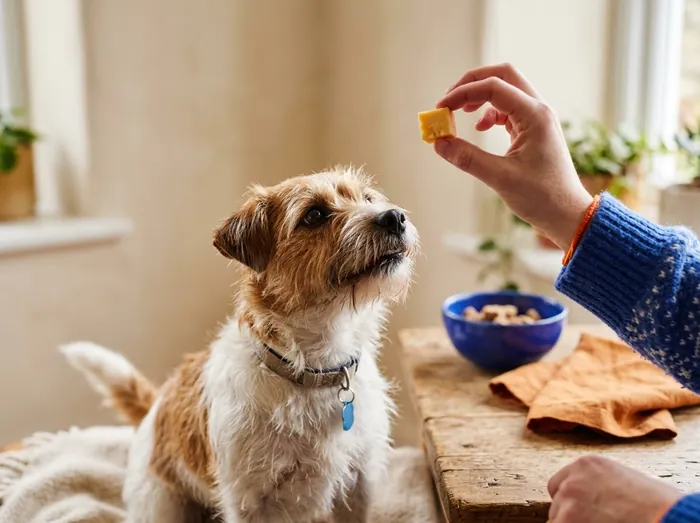
Plain cheese isn’t toxic to most dogs, and a tiny cube makes a high-value training reward. The problems come from what cheese contains:
- Lactose. Many dogs don’t digest milk sugar well. Too much cheese can cause gas, an upset stomach or diarrhea.
- Fat. Rich foods can trigger pancreatitis — a painful, sometimes serious inflammation of the pancreas — in susceptible dogs.
- Salt. Many cheeses are salty, which matters for dogs on low-sodium diets.
Which cheeses are better — and which to avoid
| Cheese | Verdict | Why |
|---|---|---|
| Mozzarella (part-skim) | Better choice | Lower in fat and lactose than many cheeses |
| Cottage cheese (plain) | Better choice | Usually lower in fat; still contains some lactose |
| Cheddar, gouda, Swiss | Occasionally, tiny pieces | High in fat and salt |
| Cream cheese, brie | Rarely | Very high in fat |
| Blue cheese (Roquefort, Stilton, gorgonzola) | No | The mold can produce roquefortine C, which dogs are sensitive to |
| Cheese with garlic, onion or chives | No | These are toxic to dogs — see onions & garlic |
Which dogs should skip cheese?
- Dogs that have had pancreatitis or are prone to it
- Dogs that are overweight
- Dogs with kidney or heart conditions on low-salt diets
- Dogs that get loose stools after dairy
How to give cheese safely
- Use pea-sized pieces, not slices.
- Start with one piece and watch for stomach upset over the next day.
- Count it as part of your dog’s treat allowance — around 10% of daily calories for all treats combined is a common guideline.
- Hiding a pill? A small piece of plain mozzarella works well. Check that it isn’t flavoured.
Frequently asked questions
My dog ate some blue cheese. What should I do?
Call your vet or a poison control line, especially if it was a large amount or the cheese was very ripe. Watch for vomiting, diarrhea, tremors or a fever.
Is cheese good for hiding pills?
A small piece of plain, low-fat cheese is a common and usually safe way to give medication. Ask your vet if the medicine should be given with food or on an empty stomach.
Can puppies eat cheese?
A tiny piece is usually fine, but puppies have sensitive stomachs. Their regular puppy food and small training treats are a better everyday choice.
This article is general information, not veterinary advice. Every pet is different — for questions about your own pet’s health, talk to your veterinarian.