Can dogs eat grapes or raisins?
Grapes, raisins, sultanas and currants can cause acute kidney injury in dogs. Some dogs react to small amounts and others don’t, so there is no known safe amount. If your dog ate any, call your vet or a poison control line now — don’t wait for symptoms.
Call your veterinarian, the ASPCA Animal Poison Control Center at (888) 426-4435, or Pet Poison Helpline at (855) 764-7661 (fees may apply). Treatment works best when it starts early. Don’t try to make your dog vomit unless a vet tells you to.
Why are grapes dangerous for dogs?
Vets have linked grapes and raisins to kidney injury in dogs for decades, but for a long time no one knew which compound was responsible. In 2021, toxicologists at the ASPCA Animal Poison Control Center connected kidney-injury cases in dogs that ate cream of tartar or tamarind — both rich in tartaric acid — with grape and raisin poisoning, and proposed tartaric acid as the likely toxic ingredient. Dogs appear to be unusually sensitive to it.
The amount of tartaric acid varies between grape varieties, growing conditions and ripeness. That may explain one of the most confusing things about grape poisoning: one dog eats a handful and seems fine, while another becomes seriously ill after a few. Researchers still describe tartaric acid as the proposed cause, but it’s the best explanation so far.
Which grape products are a risk?
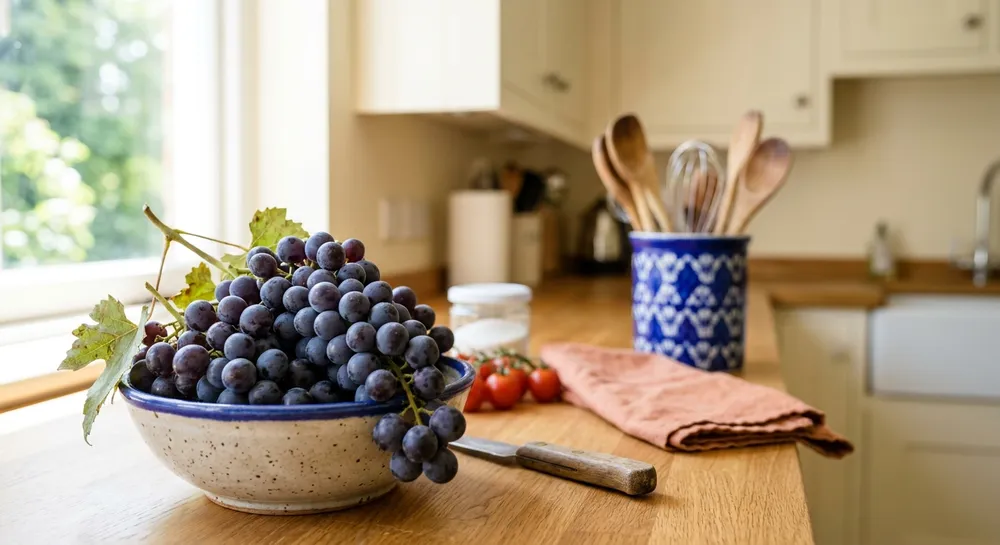
- Fresh grapes of any colour — seeded or seedless, peeled or not
- Raisins, sultanas and currants (dried grapes are more concentrated)
- Foods that hide raisins: trail mix, granola and cereal bars, raisin bread, hot cross buns, fruit cake and cookies
- Other tartaric-acid sources highlighted by the same research: cream of tartar (including homemade play dough) and tamarind
Signs of grape or raisin poisoning
Early signs are usually digestive. As the kidneys are affected, other signs can follow:
- Vomiting, sometimes with pieces of grape or raisin
- Diarrhea and loss of appetite
- Lethargy or weakness
- Belly pain
- Drinking or urinating more — or producing little or no urine, which is an emergency
Signs don’t always appear right away, which is why vets recommend calling as soon as you know your dog ate grapes, not after your dog looks unwell.
How to keep your dog safe
- Keep grapes and raisins off low tables and out of dog-height bags.
- Tell children and guests not to share grapes or raisin snacks with the dog.
- Check labels on baked goods and snack bars before sharing anything.
- If you grow grapes, clear fallen fruit from the ground.
Looking for a fruit you can share? Small pieces of banana are a safer occasional treat.
Frequently asked questions
My dog ate one grape and seems fine. Should I still call?
Yes. There’s no known safe amount, sensitivity varies between dogs, and signs can be delayed. A vet or poison control line can tell you whether your dog needs treatment based on its size and how much it ate.
Are seedless or peeled grapes safe for dogs?
No. The risk isn’t limited to seeds or skins. Seedless, peeled, green, red and purple grapes are all considered unsafe, as are raisins.
Why can some dogs eat grapes without getting sick?
The leading explanation is that tartaric acid levels vary widely between grapes, and individual dogs may respond differently. Because you can’t predict either, vets treat every exposure as potentially serious.
Sources
This article is general information, not veterinary advice. Every pet is different — for questions about your own pet’s health, talk to your veterinarian.